Show summary Hide summary
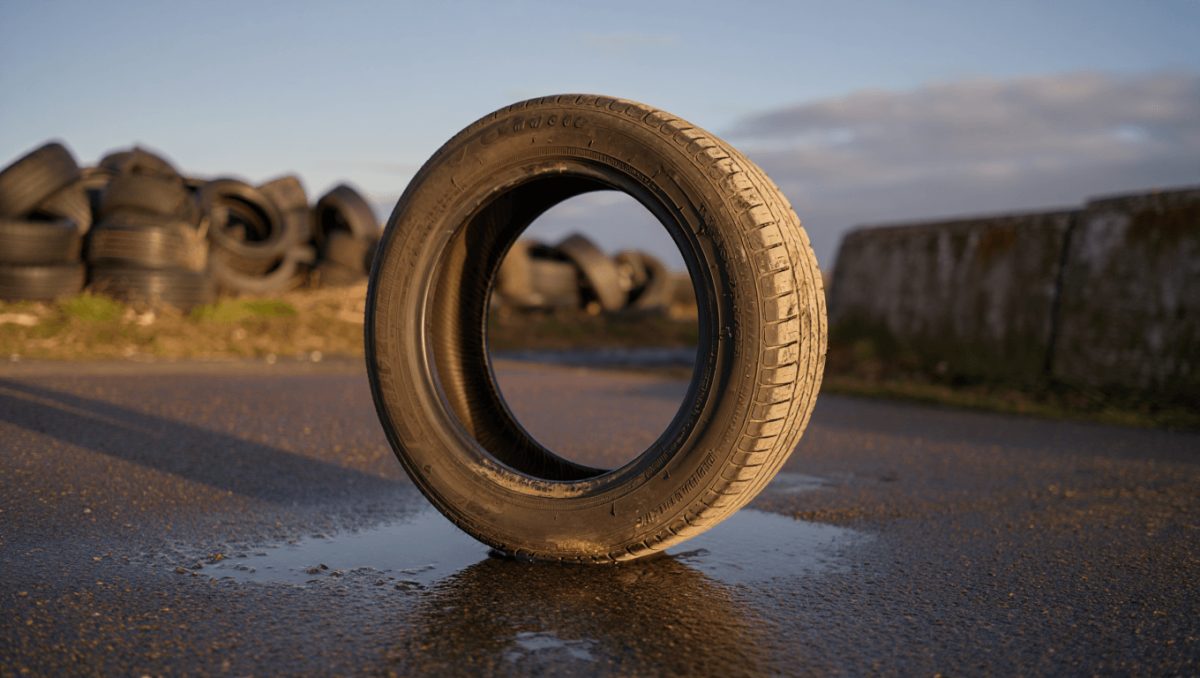
The way tyres are tested and labelled across Europe may be due for a major rethink. A research project backed by the Swiss‑Polish Cooperation Programme says current methods do not reflect real road conditions, with consequences for noise, fuel costs and EV range that matter to drivers today.
The initiative, known as ECOLABEL — Environmental Consumer‑Oriented Labelling Advancement for Better tyre energy Efficiency and Lower external noise — brings together academics including researchers at Gdańsk University of Technology to propose more realistic testing standards for tyres sold in the UK and EU.
Why existing tests are being questioned
At present, tyre noise is typically measured in a single kind of test: a vehicle coasts past a microphone at around 50 mph on a very smooth Dense Graded Asphalt (DGA) surface held at 20 °C. Researchers argue that this does not mirror the coarser, gap‑graded asphalt found on most European roads and can understate tyre noise in everyday use.
Saab’s final cars from Trollhättan factory to go under the hammer
Volkswagen ID. Polo GTI revealed: first electric GTI goes on sale
On rougher pavements, the same tyres can register substantially higher sound levels. The ECOLABEL team reports average differences of about five decibels, with some tests showing increases of up to 10–11 decibels when tyres are assessed on more representative surfaces.
The way rolling resistance is measured also dates back decades. Current regulation uses a metal drum test — a tyre is pressed onto a rotating cylinder and the force needed to keep it turning is recorded. While this creates a controlled environment, it may favour some tread designs and produce results that diverge from on‑road performance.
Proposed changes at a glance
- Create a textured drum surface that mimics common European pavements so laboratory tests better reflect real roads.
- Adjust ambient test temperatures to be tyre‑type specific: 15 °C for summer tyres, 5 °C for winter tyres, and both temperatures for all‑season models.
- Reassess acoustic testing methods to account for rougher surfaces rather than relying solely on smooth ISO reference pavements.
- Provide clearer, more representative labels so consumers can compare expected noise and energy performance more reliably.
These technical changes are intended to improve the external validity of measurements for both rolling resistance and tyre noise, giving manufacturers and buyers data that reflect real driving conditions rather than laboratory artefacts.
Impact for drivers and vehicle makers
More accurate measurements would have immediate practical consequences. Higher rolling resistance translates directly into increased fuel consumption for internal‑combustion cars and shorter range for electric vehicles, meaning drivers could face higher running costs or reduced trips between charges.
Vehicle manufacturers, the researchers say, have called for more authentic tyre data so they can produce better range and efficiency figures for customers. For consumers, clearer labelling may change purchasing behaviour and encourage stronger competition among tyre brands on measurable, real‑world attributes.
There may also be systemic benefits: if test procedures become more realistic, the overall cost of testing could fall and regulatory reporting would be more useful for fleet managers and policymakers who rely on consistent performance metrics.
Where this sits in the rule‑making timetable
ECOLABEL is still at the consultation stage. The researchers do not expect formal proposals to reach the European Commission before the end of 2028, and they caution that any regulatory shift will take time to implement.
Given the usual legislative processes and industry transition periods, the team suggests consumers should not expect widespread changes to tyre testing and labelling before the mid‑2030s.
Whether the EU adopts ECOLABEL’s recommendations will decide how quickly those more realistic standards reach forecourts and online spec sheets. If approved, the adjustments would bring tyre performance information closer to what drivers actually experience on the road — and that matters both for comfort and the running cost of vehicles today.