Show summary Hide summary
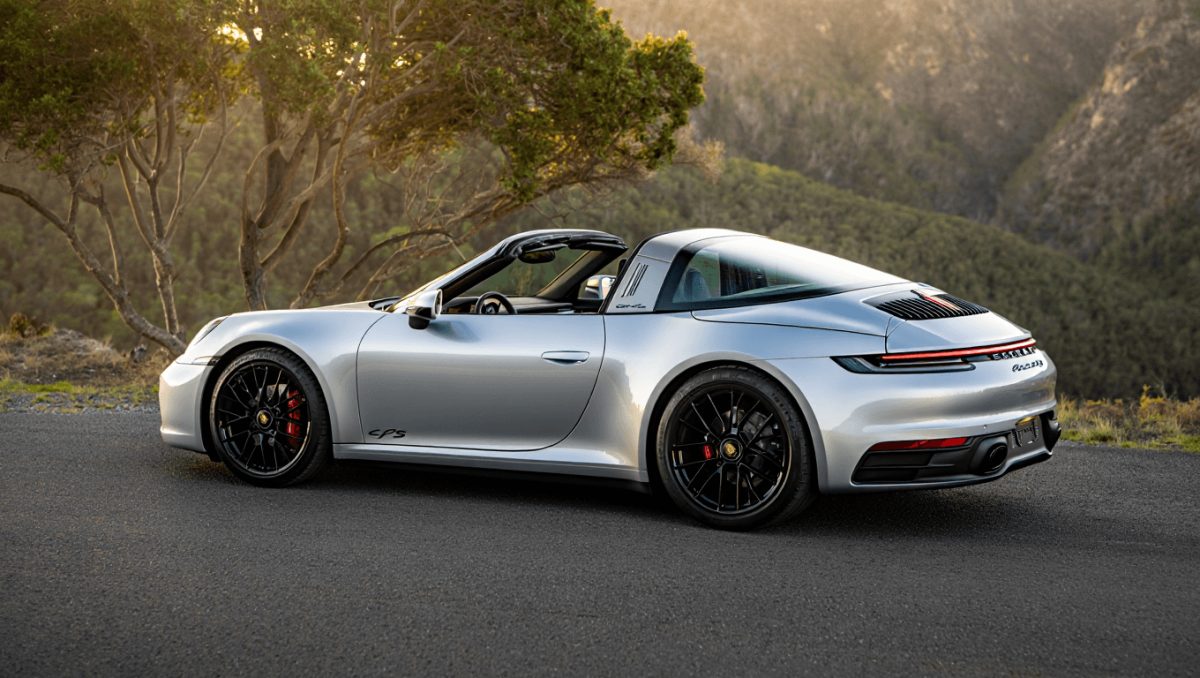
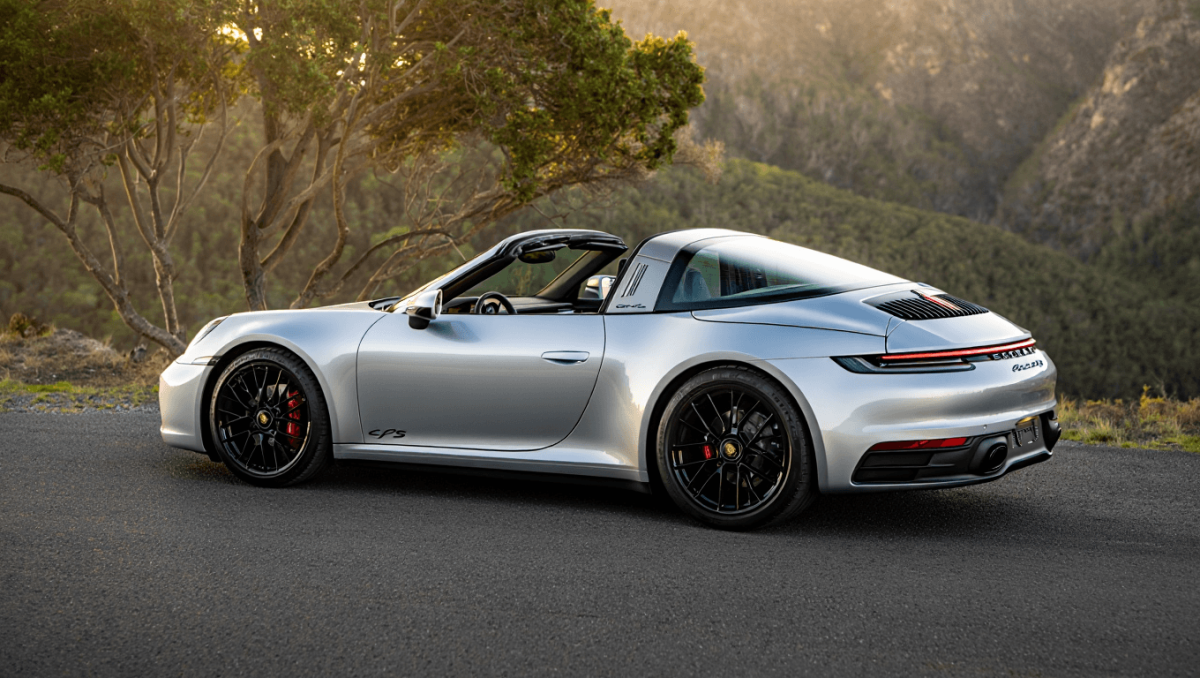
Porsche’s latest Targa 4 GTS challenges the notion that a proper 911 must be a light, rear‑drive coupe. With a complex retractable roof and a hybridised flat‑six, it’s a different sort of sports car — yet it still delivers the performance and poise buyers expect from the marque. That makes the Targa significant today as brands balance electrification and open‑top appeal without losing driver engagement.
The Targa concept stretches back to 1965, and its signature roof remains one of the most mechanically ambitious solutions in the sports‑car world. A large, curved rear screen lifts and the roll hoop fragments to allow the roof to stow cleanly behind the seats; watching it operate highlights why few manufacturers attempt anything similar.
- Distinctive roof — unique blend of coupe silhouette and open‑top driving.
- Powertrain split — 4S retains a conventional twin‑turbo six, the GTS pairs a larger flat‑six with hybrid assistance.
- Compromises — added weight, no manual or rear‑wheel‑drive option, and some wind buffeting with the roof down.
Pierre Gasly battling unexplained car faults: Alpine intensifies hunt for the cause
Ferrari on edge: Leclerc pledges to defend 2026 F1 crown
Engine, gearbox and performance
The Targa range sits between two clear identities. The 4S uses a 3.0‑litre twin‑turbo flat‑six, while the GTS features a 3.6‑litre unit augmented by electrification. Both drive all four wheels through Porsche’s eight‑speed PDK automatic, and both are quick: Porsche quotes 0–62mph times of about 3.5 seconds for the 4S and roughly 3.1 seconds for the GTS, the latter nudging a 194mph top speed.
The GTS’s hybrid architecture is subtle in use. A single turbocharger incorporates an electric motor to reduce lag, and an additional motor sits within the gearbox fed by a small 1.9kWh battery up front. The result is an engine that feels unusually immediate and linear for a single‑turbo design — a broad spread of torque low down with a strong surge as revs climb. You’ll also hear plenty of flat‑six character with the roof stowed, although some of the note has an engineered edge.
Important for enthusiasts: there is no option for a manual transmission or rear‑wheel drive on the current Targa — a deliberate choice that narrows its appeal for purists.
Wind noise and everyday usability
One practical consequence of the Targa’s engineering is cabin disturbance with the top down. The large rear glass and the aperture it leaves create resonance and buffeting at motorway speeds that can be more intrusive than a conventional soft‑top cabriolet.
A pop‑out wind deflector helps, but it doesn’t remove the effect entirely. For anyone planning long, high‑speed tours with the roof open, this is a real consideration.
Driver’s take: James Taylor, evo deputy editor, found the Targa “impressively capable across a range of uses — from long road trips to spirited B‑road driving,” noting that it carries the fundamental strengths of the 911 family through despite its layout and weight.
Ride, handling and character
Thanks to the roof mechanism the Targa is noticeably heavier than the coupe variants: around 1,695kg for the 4S and 1,745kg for the 4 GTS, roughly 100kg heavier than the hard‑top versions. That mass changes the way the car behaves but doesn’t ruin its sporting credentials.
On twisty roads the Targa feels substantial rather than lithe, yet it remains composed and precise. The chassis resists body shake and the suspension keeps composure over undulations; selecting Sport damper settings tightens responses further. The four‑wheel‑drive system gives a reassuring blend of agility and traction — the balance leans rearwards, so you can provoke some rotation if you ask for it, or rely on the front axle to haul the car out of corners when you’re onto the power.
There are minor irritations: brake pedal feel can be a touch vague at first travel (perhaps influenced by regenerative systems), and the broad rear track and chunky tyres make the car feel wide and noisy at motorway pace. Still, the overall impression is of a coherent, enjoyable 911 that masks the complexity beneath its skin.
Driver’s note: Taylor also observed that the GTS feels “more planted and resolute” than some other 911 variants — a slightly tougher, more focused interpretation of the Targa idea.
Interior and technology
The 992.2 cabin blends modern digital controls with familiar 911 ergonomics. Materials and build quality are strong and most controls are well placed. A new fully digital instrument cluster replaces the old analogue central rev counter, adding functionality but also changing a characterful touch many enthusiasts miss.
Another stylistic shift is the simpler gear selector, which replaces the previous pistol‑grip shifter. It’s functional, but some will argue the interaction has lost a little charm in the transition to a more minimal control layout.
Price and rivals
Porsche asks a premium for the Targa’s versatility: the 4S starts at about £137,600 and the 4 GTS at roughly £154,400. That positions the Targa against a handful of high‑end convertibles and sportscars rather than any mass‑market drop‑tops.
- Direct alternatives: Mercedes‑AMG SL55, Maserati GranCabrio Trofeo — both use conventional soft‑top roofs and offer different GT‑oriented traits.
- Sports‑car rivals: Chevrolet Corvette C8 Stingray (removable hard top), BMW M4 Convertible — comparable performance but different character.
- Upmarket options: Aston Martin Vantage Roadster, McLaren Artura Spider, Maserati MC20 Cielo — they sit above or alongside the Targa in price and intent.
Buyers should weigh the Targa’s unusual roof and hybrid drive against what they want from a 911: more novelty and everyday usability, or the rawest possible driving experience from a lightweight coupe.
Verdict: the Targa 4 GTS is not the purist’s ideal on paper, but in practice it remains a thoroughly convincing 911 — flamboyant, capable and characterful. If you value a unique open‑top silhouette without abandoning serious performance, it’s hard to dismiss; if outright driver purity is the priority, the GTS coupe still has the edge.